Give AxonX a Star on GitHub! ↗
AGENT-NATIVE QUANT HARNESS
Quantitative research.
Built with Agents.
An agent-native harness for quantitative code development, experiment execution, and result analysis. Use your prompt and AxonX Skill with an Agent to improve Qlib Alpha158-based plugins or develop new research plugins.

Latest Updates
- 0.3.0 released: supports inheritable configuration, unified Task execution, and scheduled Tasks that continue across service restarts.
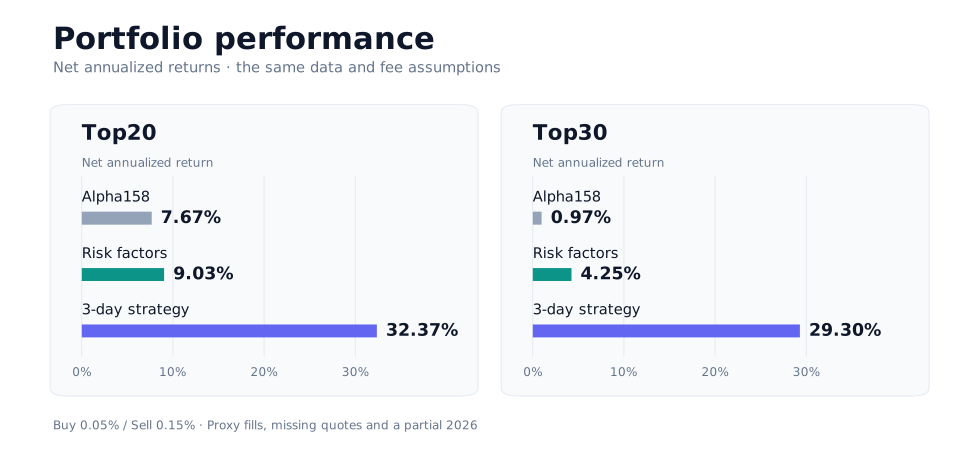
- Alpha158 experiments: risk factors and rank retention improved Top20 net annualized returns by +1.36 pp and +24.70 pp over the adapted baseline. See results and evidence limits.
- Studio Playground: explore Tasks and charts with simulated data. Try it online.
01 / GET STARTED
Run your first task
Run the built-in demo, check its result and exit code, then inspect the record.
↗02 / AGENT DEVELOPMENT
Develop with an Agent
Prepare source and tools; use the Skill and a research prompt to develop plugins.
↗03 / RESEARCH
Build a research workflow
Run a baseline, develop plugins, and evaluate features, models, and portfolio policies.
↗01 / AXONX STUDIO
See your research unfold.
From task execution to result interpretation, inspect your research in one workspace. Complete Studio 0.3.0 screenshots use Playground's fictional data and simulated execution.
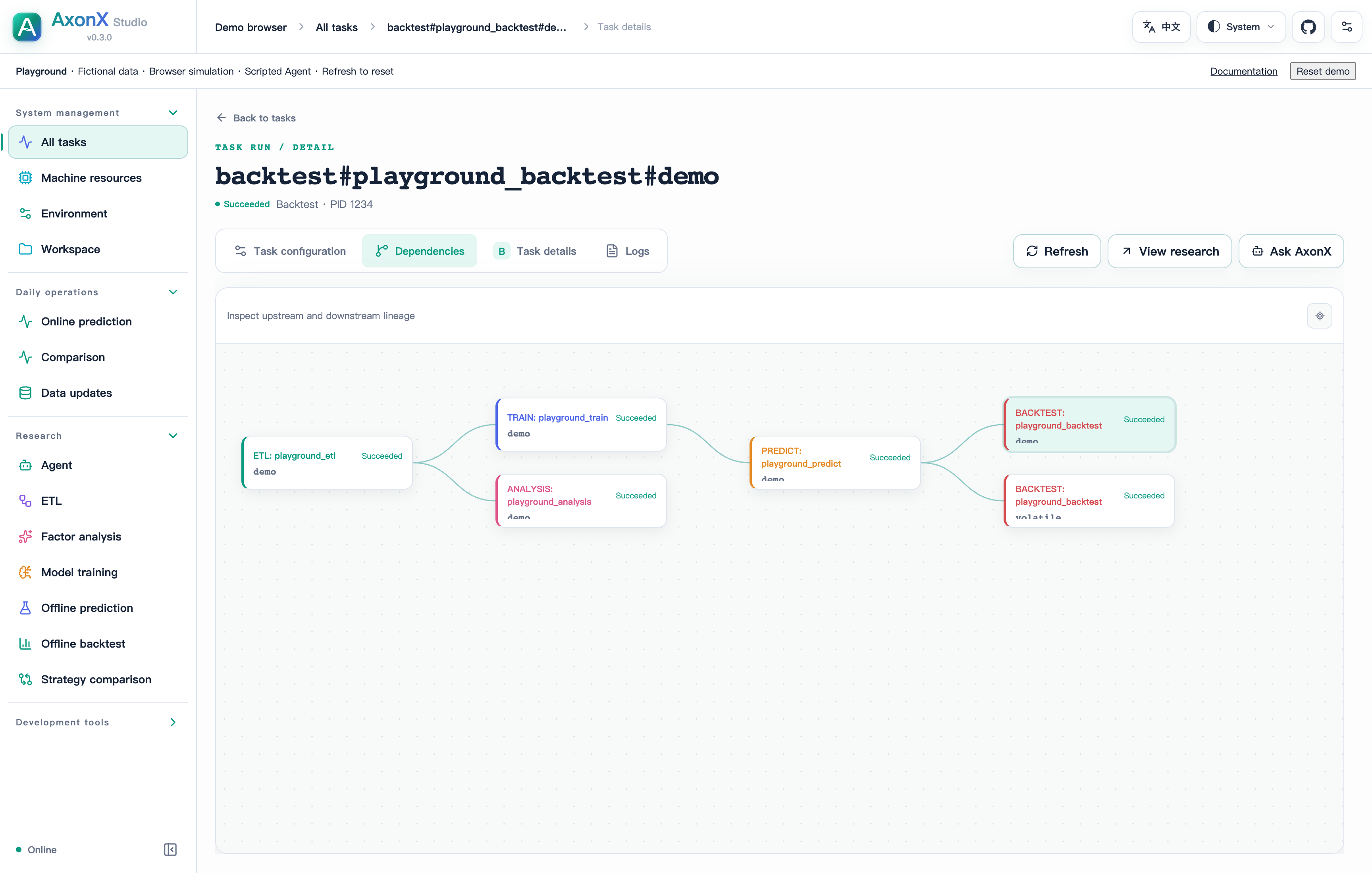
Inspect execution records and trace upstream artifacts.
Read the guide ↗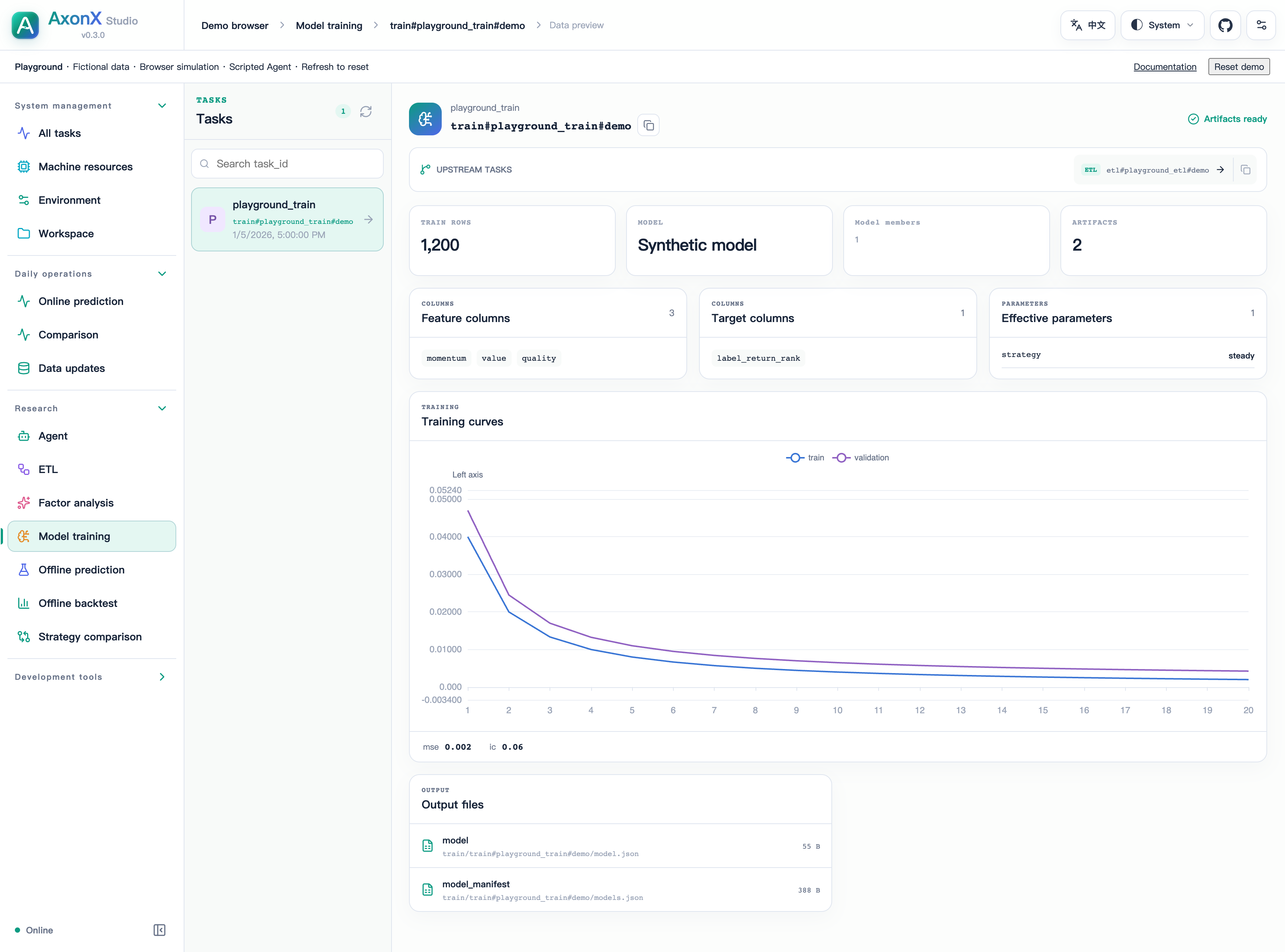
Inspect the evidence, from configuration to validation curves.
Read the guide ↗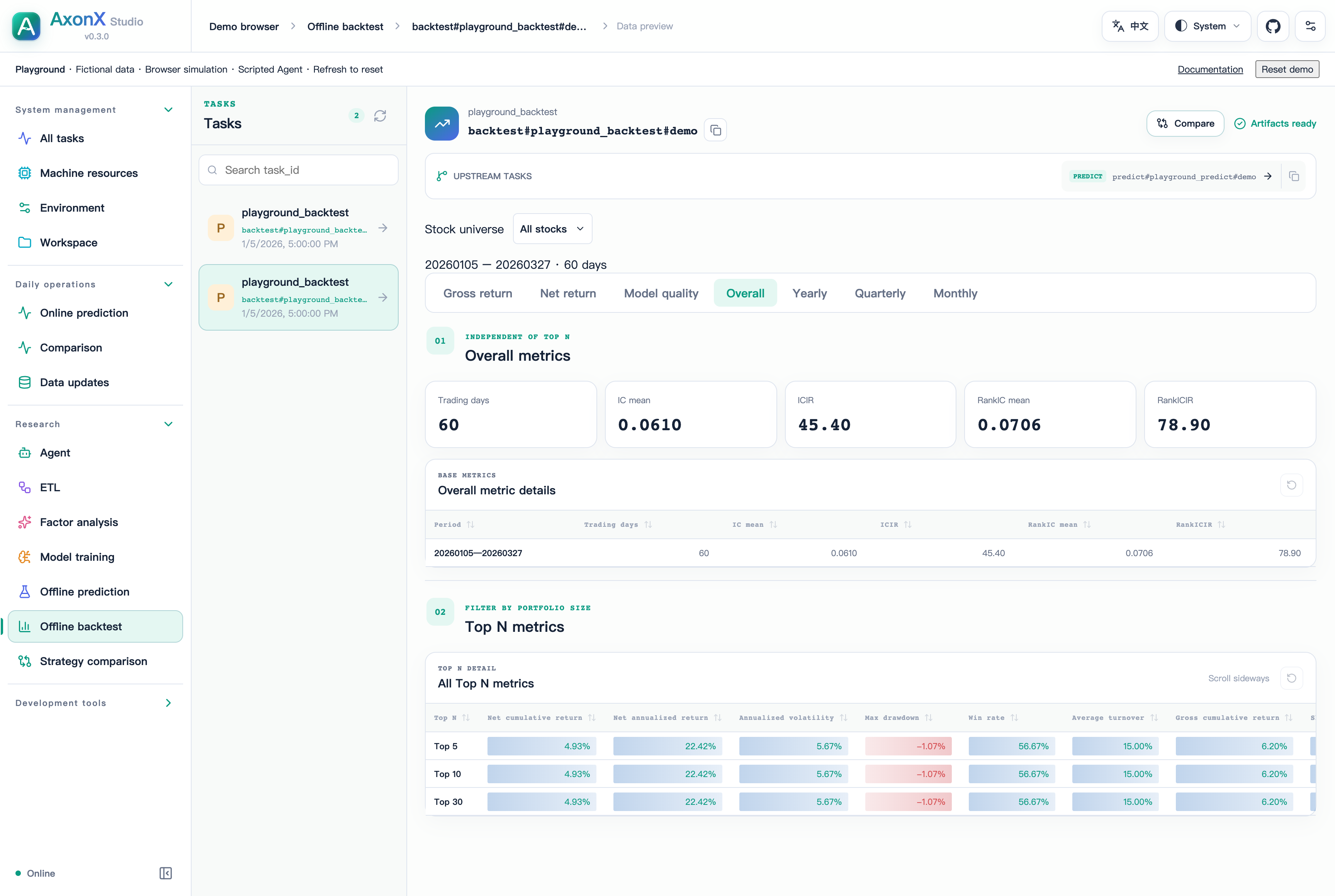
Read returns, costs, and quality together.
Read the guide ↗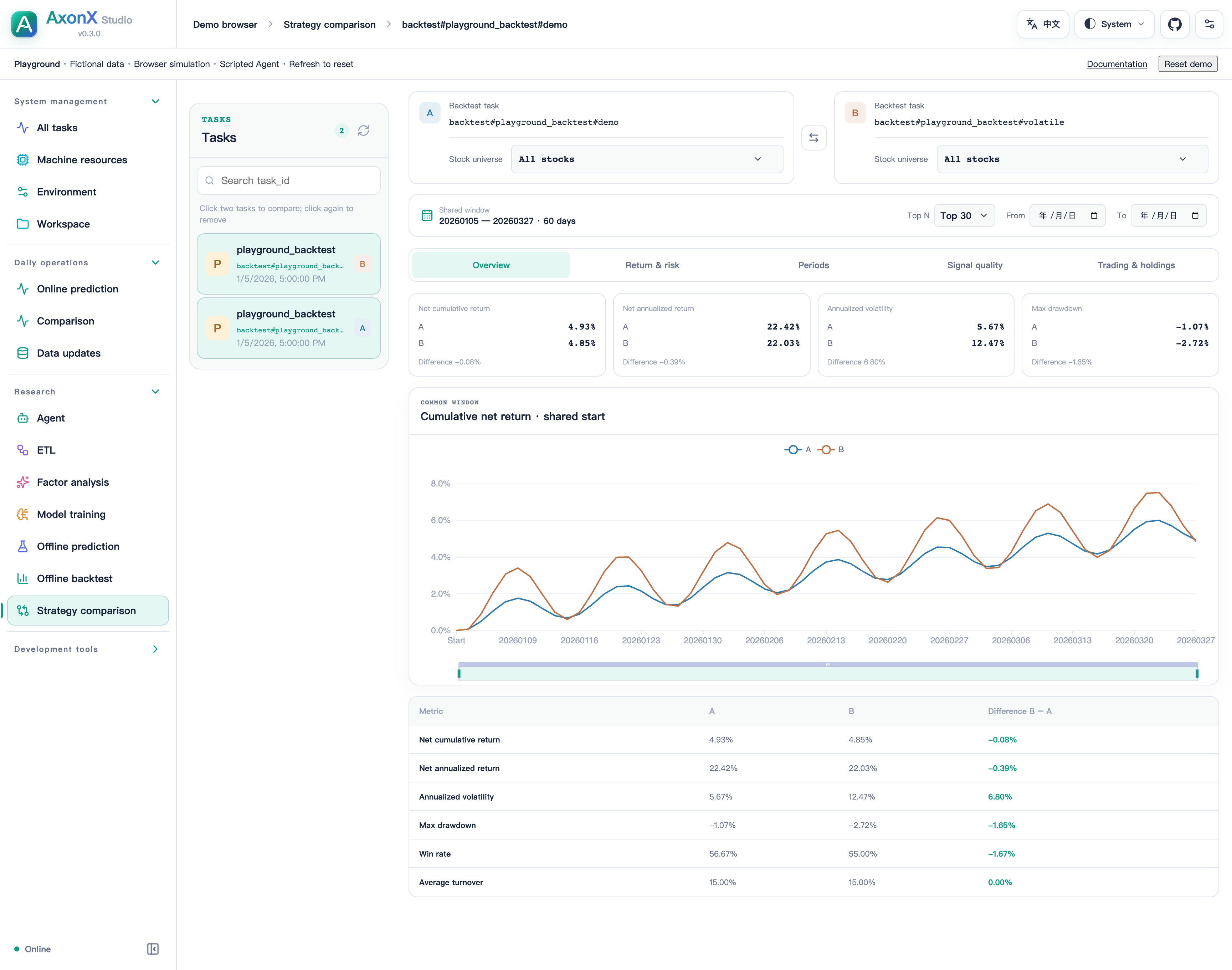
Understand strategy differences over a shared period.
Read the guide ↗02 / HARNESS CORE
Flexible research. Grounded execution.
PLUGIN ↗
Research, independently extensible
Package algorithms and tasks as plugins with explicit input and output contracts.
TASK ↗
Execution you can inspect
Inspect the current Task's status, parameters, artifacts, and linked logs.
MACHINE ↗
Multiple machines, one entry point
Access remote tasks, machine resources, and research results through a shared interface.
JOB API ↗
Studio, CLI, and agents connected
Run Tasks through the CLI and inspect shared records through service Jobs.
03 / CONTINUE YOUR RESEARCH
Continue by goal.
AGENT ↗
Research with an agent
Develop or improve research plugins, run Tasks, inspect results, and iterate.
EXPERIMENT ↗
Design inspectable experiments
Fix controls, screen candidates, then confirm independently.
OPERATIONS ↗
Manage execution environments
Connect remote machines and maintain tasks, files, and services.
DEVELOP ↗
Extend research capabilities
Build plugins using Task contracts and framework extension points.
04 / AGENT RESEARCH CASE
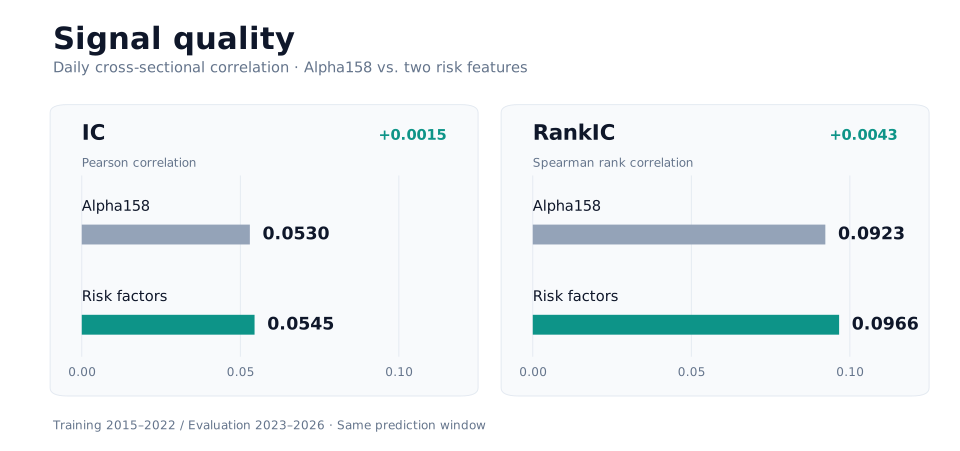
Improving Qlib Alpha158 with factors and portfolio policies
Top20 net annualized returns are 7.67%, 9.03%, and 32.37% for Alpha158, two added risk factors, and 3-day rank retention, with buy/sell fees of 0.05%/0.15%. Base and factor models use different feature_fraction settings; market data is incomplete and there is no independent confirmation window.
05 / BUILD YOUR RESEARCH LOOP
Start with one Task.
The built-in demo needs no external data or model credentials.